
Full Moon Drumming &Dance Circle Resources
Natural Earth, Sun, Moon, Tide Rhythms, Weather & Fire Safety for Community Celebrations in Nature
Practical info and resources to help plan and pull off awesome music/ dance gatherings in wild natural settings. This is based on our experience in Santa Barbara, CA. The nature pulse (weather/ tide etc.) resources are Santa Barbara-centric but useful/ adaptable to some extent anywhere on planet earth.
On this page
Elsewhere:
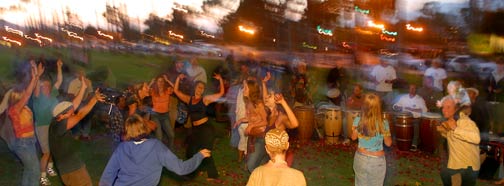
Saturday Circle across from Chase Palm Park ...starts a few hours before sunset (photo by David Muscroft)
Why
Gathering in nature, making music and dance together connects us to nature and each other, is super fun and energizing, rejuvenating, exhilarating...
Here is Ngoki's founding vision for Ngoma, the SB drum dance listserv:
"Ngoma is the original, raw, primal essence of our gathering with
drumming and dancing to heal, transform, and celebrate, before it
was ever crystallized into any particular cultural tradition or
distinctive style. Ngoma is the original human impulse and tendency
to drum and dance for any and every reason. Ngoma is the generic,
non-specific, underlying, internal motivation and inspiration itself
that manifests outwardly as the natural human behavior of gathering
together with drumming and dancing.
Ngoma refers to an all-inclusive community health care system
based primarily on ecstatic drumming, dancing, and singing. Ngoma is
the moment to moment action of returning to a way of life that
includes drumming and dancing free of any limitation and constraint.
Ngoma is also the gatherings themselves where this free, ecstatic
drumming and dancing is taking place. And perhaps most importantly,
ngoma is a global, worldwide primal drum and dance movement taking
place on the entire planet right now, where more and more people are
beginning to gather with intentional, ecstatic drumming, dancing,
and singing.
Ngoma doesn't belong to anyone. Ngoma is a way of looking at and
talking about something that all human beings already have in common-
-this primal impulse to drum and dance. Ngoma is already a
fundamental part of our essential human nature and intelligence.
Ngoma is actually encoded in the cellular DNA of our species, though
it is often blocked and prevented from fully expressing. The mission
and highest purpose of ngoma in the world at this time is to offer a
definite way of awakening and activating the "ngoma information"
in our DNA, to increase our quality of life individually and
collectively.
Ngoma is the "way and the power" of community healing,
transformational drumming, dancing, and singing."
-Ngoki
When
It's powerful to celebrate in sync with natural rhythms...sunrise, sunset, full moons, winter and summer solstices, spring and fall equinoxes, first rain, eclipses, etc. etc...
Full Moon Celebration Dates
Note that we celebrate on the night of the natural full moon peak. This is often the day before the full moon date shown on most calendars. If the moment of peak fullness is when it's dark, that's easy; it's that night. If it's not, then it gets more complicated. There's three main factors we look at, in order of importance—
- Peak light—moonlight kicking in before dusk, and continuing to dawn. You can measure this by looking up the sunset/moonrise and moonset/sunrise times for two nights and compare how many minutes there are when neither the moon or the sun are above the horizon.
- Waxing—moon getting bigger instead of smaller
- Peak fullness—the night which is closer to peak fullness will have the bigger moon
When it's a close call, we look at weather and (though we try not to) weekend/ weekday human calendar stuff. We've noticed that being a night early still catches the building energy, but being a night late it's been kind of waning energy.
Why does peak light matter? The rest of the animal and plant kingdoms are powerfully affected by peak light...the one night a month when the moon is already illuminating when the sun sets, and still illuminating when it rises.
(That's the most important factor, followed by when the peak fullness is attained, and how much of the night is waxing vs waning, followed by when peak fullness is attained.---)
Moon phases, moonrise, moonset and % illumination, Solar and lunar eclipses, sunrise, sunset and altitude from timeanddate.com
Full moon dates for Santa Barbara from Farmer's Almanac
Sun & Moon Rise, Set Times From U.S. Naval Observatory Astronomical Applications Department--includes civil twilight info
SpaceWeather.com, SkyAndTelescope other cool things in the sky
Example...
The following information is provided for Santa Barbara, Santa Barbara County, California (longitude W119.7, latitude N34.4):
Saturday
22 December 2007 Pacific Standard Time
SUN
Begin civil twilight 6:34 a.m.
Sunrise 7:02 a.m.
Sun transit 11:57 a.m.
Sunset 4:53 p.m.
End civil twilight 5:21 p.m.
MOON
Moonrise 2:32 p.m. on preceding day
Moonset 5:45 a.m.
Moonrise 3:28 p.m.
Moon transit 11:11 p.m.
Moonset 6:55 a.m. on following day
Phase of the Moon on 22 December: waxing gibbous with 98% of the Moon's visible disk illuminated.
Full Moon on 23 December 2007 at 5:16 p.m. Pacific Standard Time.
If we weren't so insulated from natural rhythms this would be an obvious, recurring part of our own life rhythm...in the 14 nights between new and full moon, the moon is higher and higher in the sky when the sun sets, so the all the way dark night (starlight only) is shorter and shorter. If you are a creature whose life is run by natural rather than electric light, this is huge—instead of having to be back in your burrow by dark, you get to stay active. The closer it gets to full moon, the lighter and longer the moonlight extension pushes back the full darkness of night.
Finally, on the night of peak light, the full moon rises at sunset and stays in the sky all the way till sunrise‚—a natural invitation to all the earth's creatures to pull an all-nighter. The very next day, the moon rises an hour after sunset, so there's about half hour of real dark that separates day from moonlight—totally different vibe, back to the burrow, party's over.
If my understanding is correct, if the moon's peak fullness is near midnight, (like it was our Santa Barbara longitude the 1st of December, 2009, when it peaks at 11:30 pm) then the moon is rising on the horizon as the sun is setting into it—moon "dawn" overlaps with sun dusk, and vice versa at sunrise.
Thus, to continue the December 2009 example, at Santa Barbara latitude it will be continuously light from dawn on November 30th at 6 am (which will happen with the moon about half an hour below the western horizon) to dusk december 2nd at 5:15 pm (at which time the moon will be about half an hour below the eastern horizon)...about 35 hours of light, compared to a paltry 11 hours of light on new moon day just two weeks later.
The full moon peak happens at the same instant everywhere. However, the night of peak light might vary a day depending on where you are on the planet's surface, and how your local sunset/ moonrise interweave with this peak moon time. (I think I got this right.)
Where
The exact place you meet will have a big effect on the character of the gathering...
In general you want a spot where--
- Nature is wild, strong and inspiring
- A short or long walk insulates from the detritus of civilization
- Loud music all night long will not disturb anyone or attract police
You also want a favorable microclimate, to be above high tide line, etc. etc.
Directions to typical SB gathering spots (password required)
Weather
To develop your weather intuition,
- Pay attention to your own sensory input; look at the sky; feel the humidity, the wind
- Guess what the weather is going to be like
- Check the forecasts to see what others think
- Compare to what really happens
- Repeat....
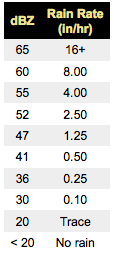 |
Radar key |
Forecasts which take microclimates into pretty good account:
Weather at spine of SB mountains and hourly weather graph...direct output of all parameters from the computer model, by hour; super cool.
Weather at SB beach, hourly weather graph, weather by minute
SB area weather discussion (all from NOAA)
SB area temperature, wind, Waves, Rain+wind (all from Windy.com)
To figure out what's likely to go down rain wise right before an event, radar seems to work best. It shows what's actually coming down, up to about 5 minutes previously...
SB area almost live radar base reflectivity (rain near ground), radar composite reflectivity (peak rain in whole air column), radar FAQ, visible satillite image from NOAA, rainfall history from SBCO Public Works.
SoCal combined satilite and radar
SW US combined satilite and radar from Accuweather
Animated 300 mile Radar Ten day weather & radar maps from weather.com
Wind from windalert.com - I like the dropdown with different models
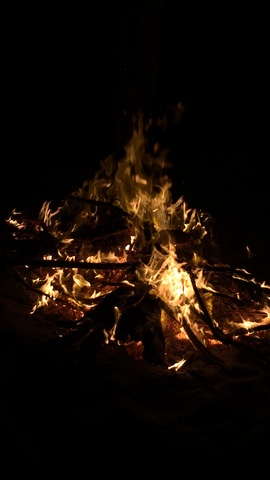
Pay especial attention to the weather for Bonfire Safety; this page includes links for current fire danger by location.
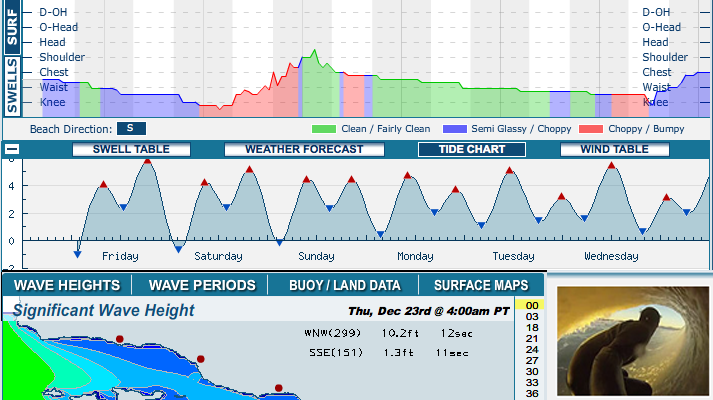
Surf/ Tide report SB (high surf makes the dry part of the beach smaller) Tides; real time ocean water temp and levels
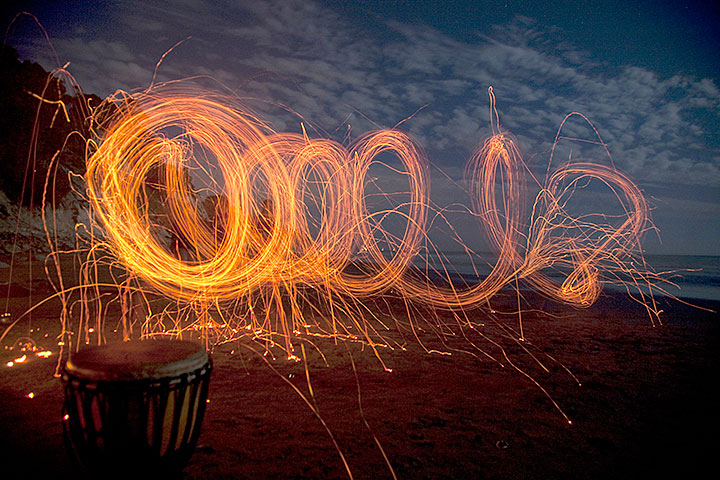
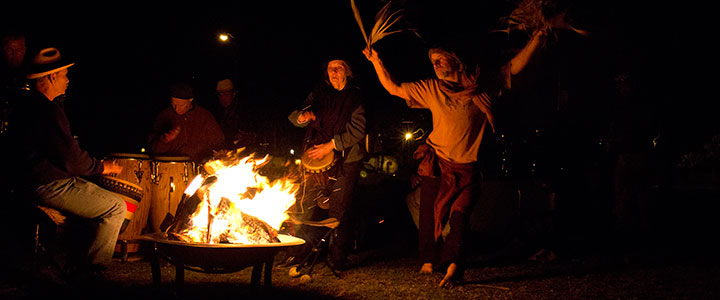
Light track from carbon neutral fire spinning toys made from Euculyptus bark. The person spinning was not lit and was moving too fast and continuously to register on the camera (fire safety note: There's no wind, and about seventy feet of damp sand to the nearest bushes. Best place to play with this stuff is in the water--makes awesome reflections).
How
The essential ingredients are:
1) Good music ...at least one good drummer, at least one bass drum (dun dun, surdo...)
Drums & Classes—Dancing Drum
Drums—Full Circle Drums
2) Dancing...this is really a question of just going for it, though classes don't hurt...
Community Relations
As populations increase and open space decreases, it's more and more essential to maintain excellent relations with neighbors, police, firefighters, forest service, parks departments, and any other stakeholders. Just talking with people works wonders. We've had virtually 100% positive experience with more engagement, as compared to just trying to slide by. Sometimes this has involved modifiying our behavior. For example, we never make a fire when conditions are not safe. Hard to believe we ever acted differently, but we did, and other groups still do make fires in red flag fire conditions. This is just common sense, as well as being good citizens. Responding to noise complaints by moving, getting quieter (or just picking a good spot in the first place) has helped make our gatherings sustainable over decades.
We've had overall very positive interactions with police by--
- coming from a place of deep appreciation for the value of the difficult, dangerous job they do—to provide a level of security which is, in the larger scheme of things, close to ideal (neither lawless nor police state)
- respecting police officers need for physical security—would have never occured to me, but they have a legit level of caution/ fear approaching a wild group that outnumbers them 30 to 1 in the dark far from backup. Don't come up behind them or surround them, keep your hands in view, don't touch them, surround them. Why Police Might Be Touchier than seems reasonable to a non-violent person
- talking with them calmly and clearly
- having our act together with respect to fire safety, trash, and underage drinking—which are their hot buttons around here
- having good police ambassadors from our group at the front and keeping any hotheads at the back
- initiating contact before the police have committed to a response. This could be before the event, or the moment they walk up. Once the police have formed an assessment and have decided, for example, to shut an event down, or require that the fire be put out it's harder to change their minds (if your job includes getting shot at, appearing indecisive isn't adaptive)-- though we have changed their minds on many occasions, once they realize how unusually together our group is
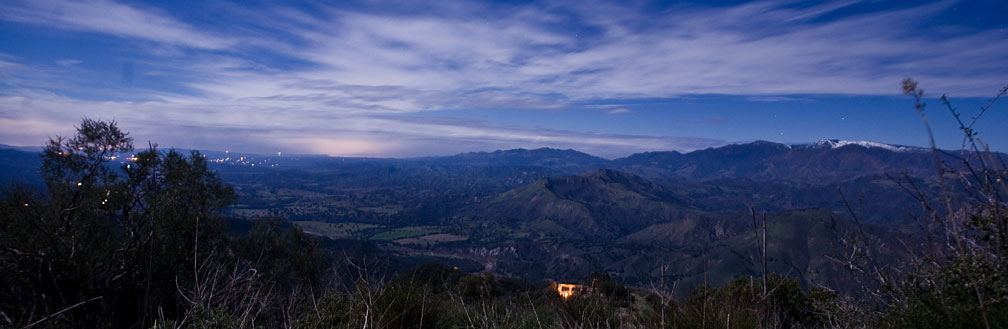
Moonset with snowcapped peaks ringing winter drum circle
Stories
Celebrations worth checking out
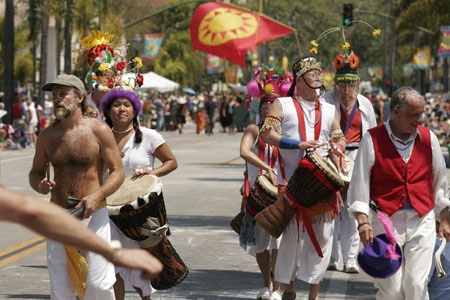
Santa Barbara Summer Solstice Parade
Random links
Santa ynez river flow below Gibralter Dam, Below Laurels Canyon, near Santa Ynez, At Solvang, Temp, etc.
Weather halfway up mountains, hourly graph
Video
June 2009 full moon drumming with epic fire hooping by Ahni Radvanyi and Kit Hoopster
April 25th 2013 full moon drumming
August 9th 2014 full moon...video mostly of fire dancing to music
SB drum dancers going wild at soho to music by the Dancing Drum Community Ensemble
Saturday Drum Circle 6/13/2009
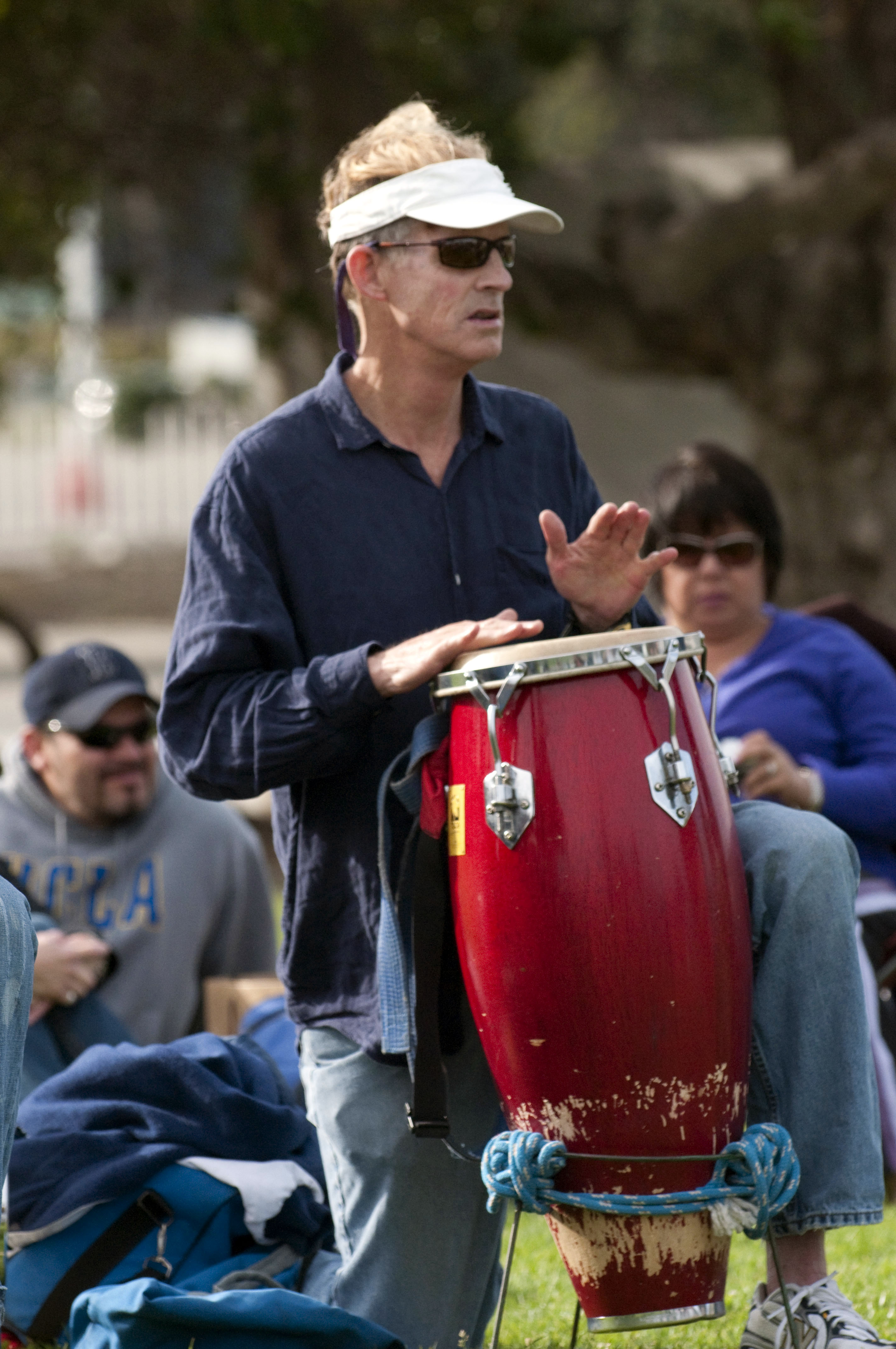
Fond memories for drum circle stalwart Tom Dunlop, 1953-2012
(click image to download full size version)
FOLI There is no movement without rhythm
Email us feedback
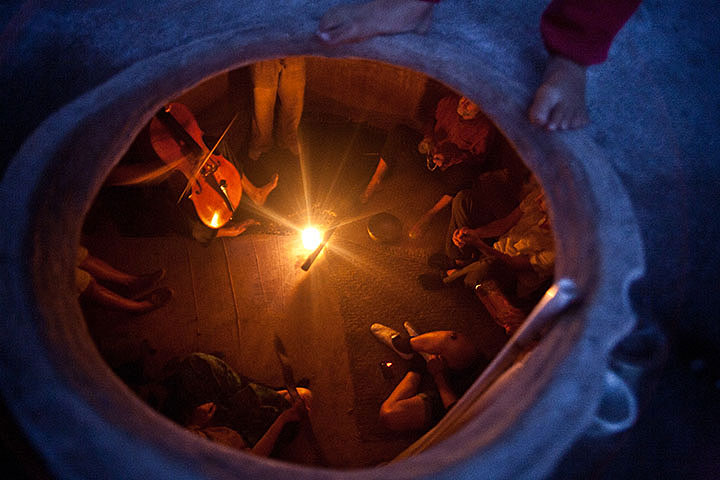
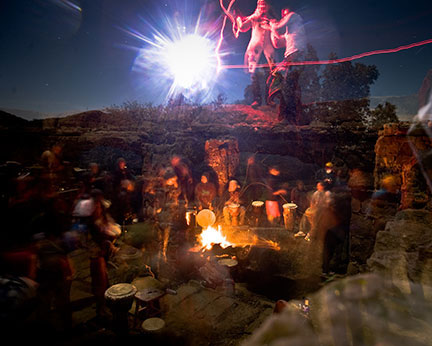
Music circle inside a ferrocement rainwater cistern at a party in Santa Barbara--acoustics in this environment are just stunning. That night people played in here continuously from about 9pm to sunrise.